

Business Collection
Tailoring for the hours that count — built to be unremarkable, and to stay that way for a decade.
Business tailoring has one job: to be entirely correct and never once the subject. It should not be noticed at a meeting, remembered at a deposition, or discussed at a table. It should simply place a man in a room already dressed.
This is the collection that does the work. Navy and charcoal worsteds in the weights that survive daily wear. Suits that hold their line through a flight, a courtroom, a fourteen-hour day. Nothing here is designed to be interesting.
Worn 200 Days a Year.

Who It’s For
Attorneys, bankers, executives, advisors, principals — people whose clothing is read before they speak, in professions where being slightly wrong is worse than being plain.
The client who owns two suits and wears them to exhaustion. The client who has four and rotates them properly. The client who has just been made partner and understands that the wardrobe now has to keep up. The client who makes a fashion statement with the investor statement.
The Suit You Wear Most Should Fit Best
It is the highest-mileage garment you own. A wedding suit is worn once. A business suit is worn two hundred days a year. Fit compounds — an off-the-rack shoulder is a small irritation on Tuesday and a permanent one by March.
It is built for the body you actually have. Every man is asymmetrical; most are asymmetrical enough to matter. One shoulder lower, one arm longer, a stance forward or back. We build that into the pattern rather than pinning around it.
It is specified for your working day. A jacket for a man who drives is cut differently from one for a man who flies. Sleeve pitch for a keyboard. Trouser rise for sitting eight hours. Cloth weight for an over-heated office. These are choices, and off-the-rack makes none of them.
Discretion is specifiable. Lapel width, trouser break, the precise depth of a navy. In conservative professions, the margin between correct and slightly wrong is narrow — and it is entirely a matter of specification.
The second suit is easier than the first. Your pattern is kept on file. Once it is right, it is right permanently — reorder in a new cloth without starting again.
Practical: allow 4–6 weeks. Most clients begin with one suit, return for the second within the season, and build a rotation from there. A four-suit rotation is the point at which suits stop wearing out — each one gets three days to recover between wears.

| Stage | Our Recommendation |
|---|---|
| The first suit | Navy, single-breasted, two-button, notch lapel, 11–13 oz worsted. Correct in every room in the country. Nothing else earns this slot. |
| The second | Charcoal, same cut. Between them these two cover every professional obligation you have. |
| The third | The same weight in a birdseye, nailhead, or fine sharkskin. Reads solid at three paces; rewards a closer look. Depth without risk. |
| The fourth | Mid-grey, or navy with a subtle chalk stripe or windowpane. Where personality is permitted, and only once the foundation is built. |
| Winter | Flannel — grey especially. Softer, deeper in colour, and the most flattering cloth in tailoring. |
| Summer & travel | High-twist or fresco, 9–11 oz. Breathes, resists creasing, arrives looking like it was hung up. |
| Business without a suit | Navy hopsack blazer and grey flannel trousers. The most useful two garments a professional man can own. |
| The overcoat | 16 oz and above, navy or camel, knee-length. One coat, worn over everything, for fifteen years. |


Shirts
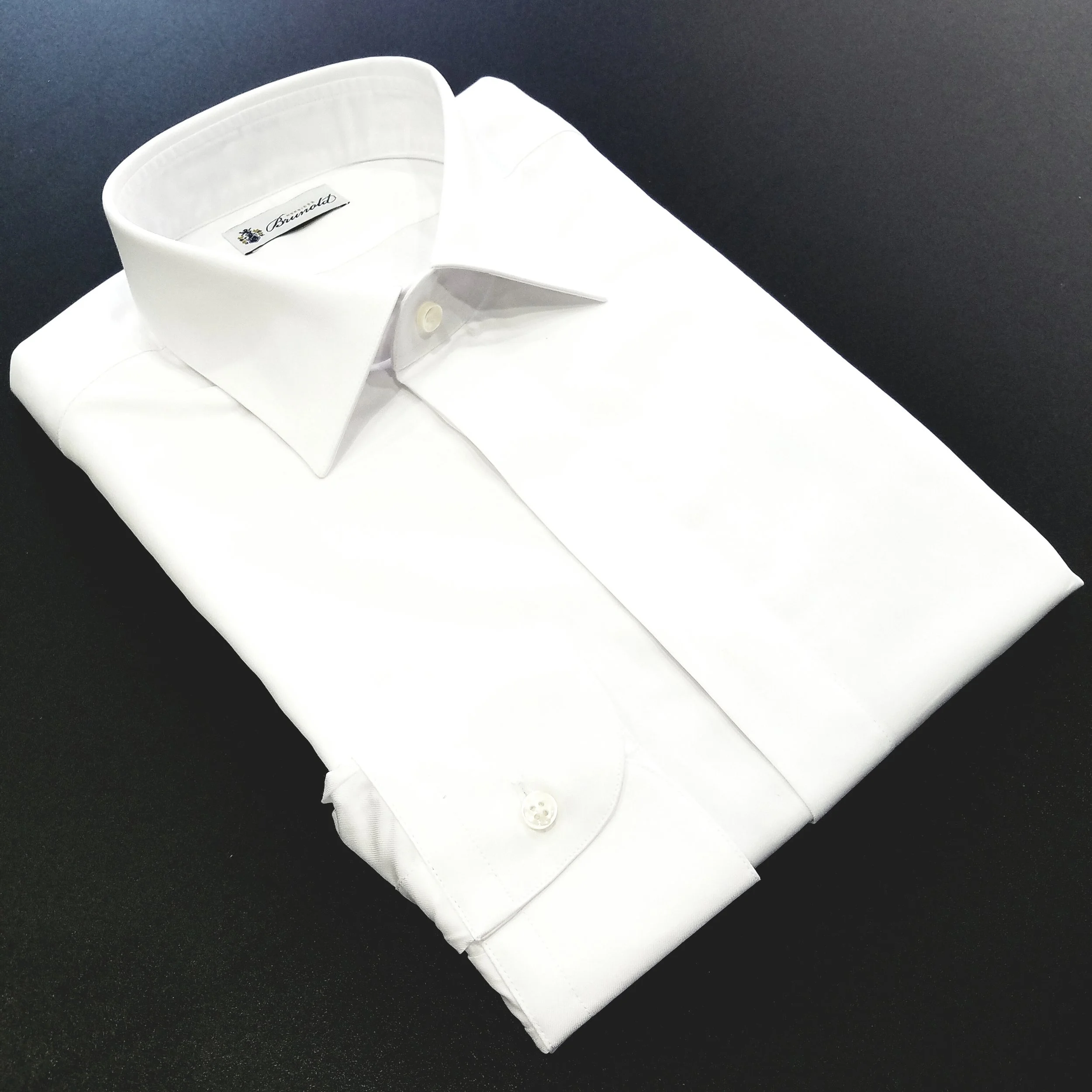
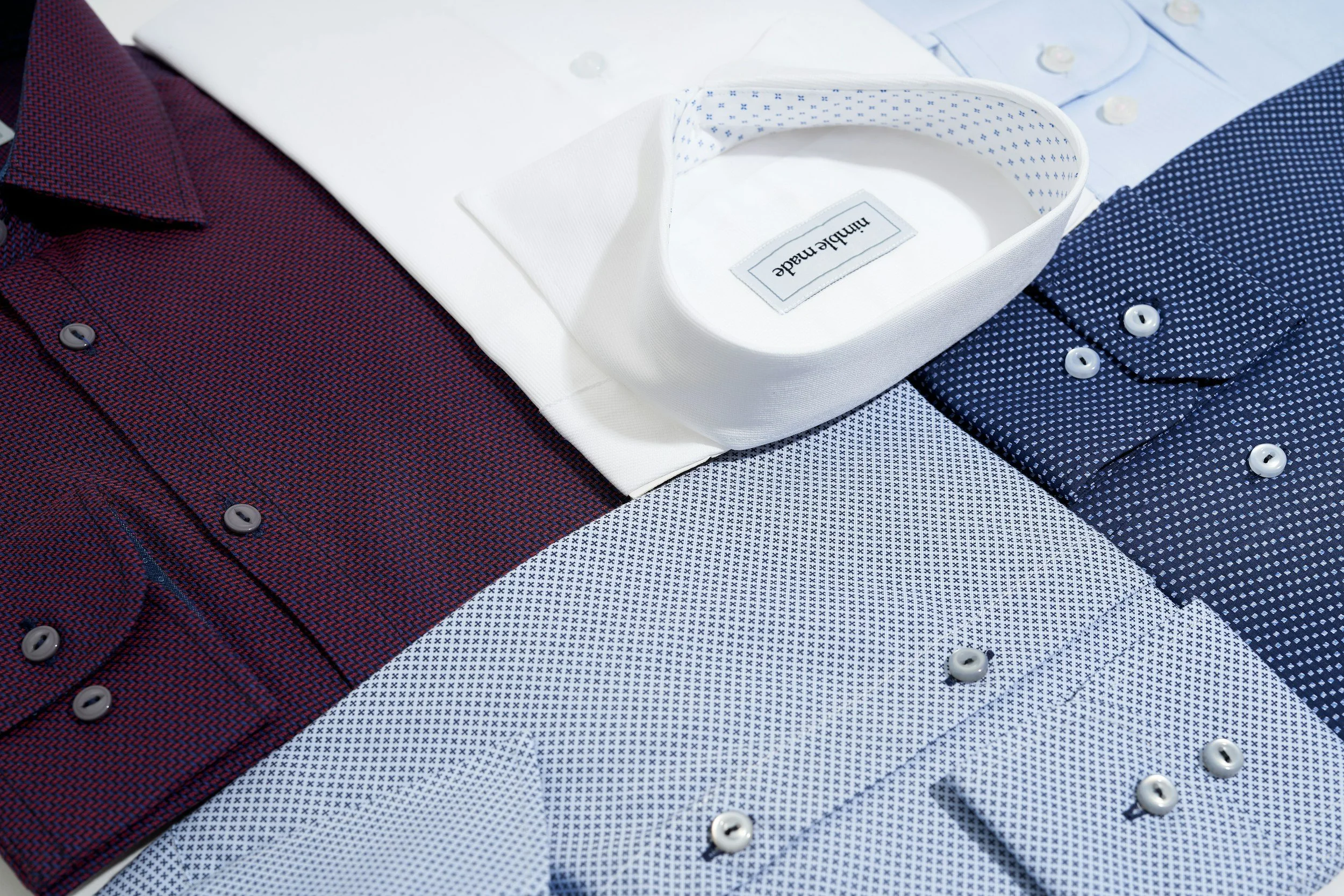
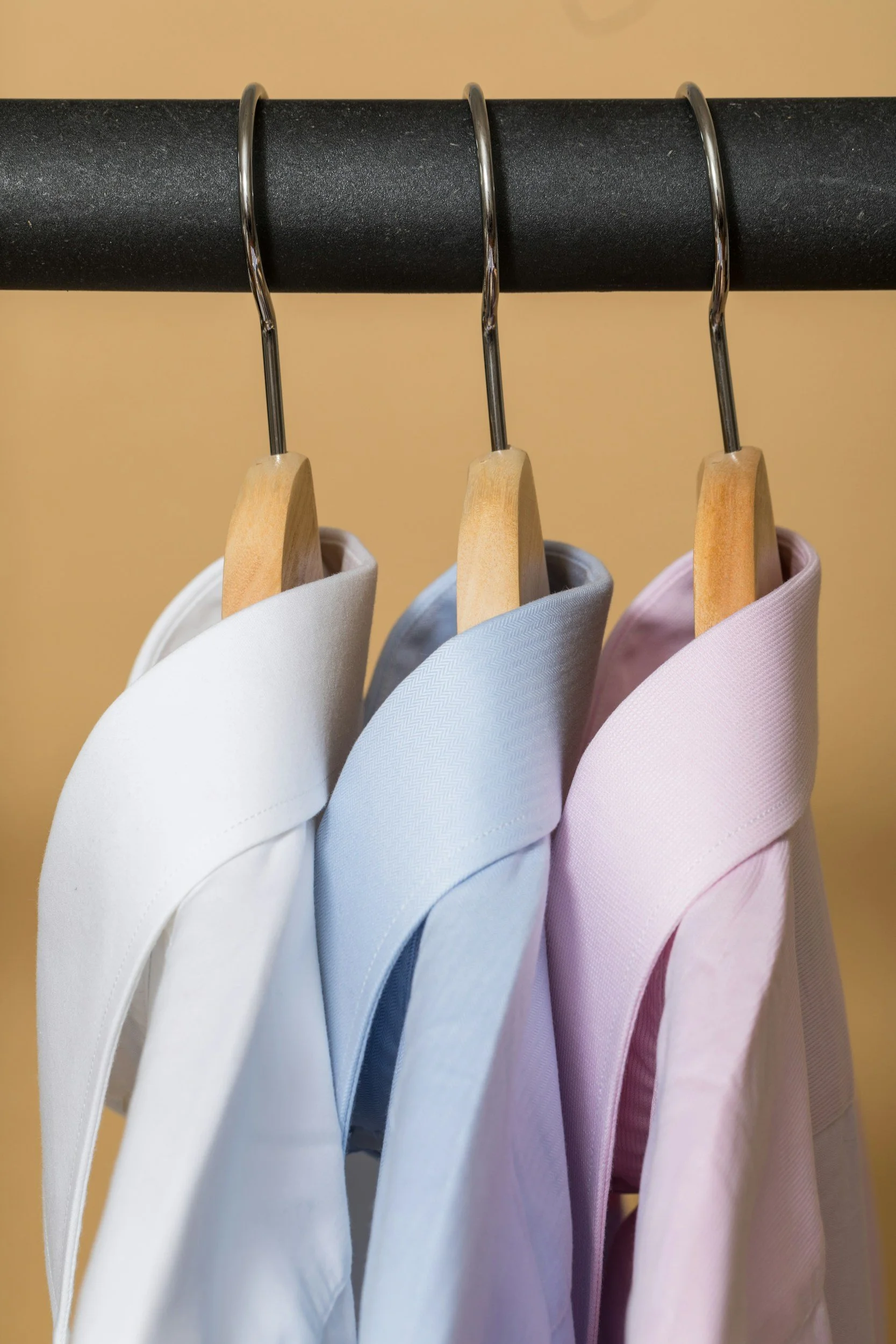
A suit is only as good as the shirt under it. Two-ply poplin and twill in white and pale blue, from Thomas Mason and Albini — cut to your neck, your sleeve, your cuff, with a collar that frames the tie and holds its shape past lunch. Most clients order in threes.
Start With Navy
Ninety minutes on Bleecker Street. We'll take the pattern once and keep it for as long as you need it.